


Tableware and Linens
Sterling Silver Cake Breakers ~ S. Kirk and Schneider-Toledo
$95.99
-
DetailsCake breakers were first used to cut through light cakes, like angel food cakes, as they prevent the cake from being crushed when cut. I use mine on most of my cakes, preferring it to knives for the same reason. Wonderful for those amazing Costco chocolate cakes! (And always a fun point of interest for my guests)
This large cake breaker was made in the 1950s,. This server is crafted with an elegance that hearkened back to the turn of the century and has stainless tines, something to be sought, as silver plated tines of the oldest silver often wear badly. This is a great gift for new brides-to-be...something I love to give with a note of wonder about the women who used it and treasured it first...
Style A:
Length: 10 1/4 inches
Tine width: 3 1/2 inches
Weight: 133 grams
Markings: No clear markings.
The working end is stainless steel, (you want this) and the handle is sterling silver. The Schneider-Toledo company invented the concept of the piercing tines over a knife for a cake. For a long while Schneider-Toledo only made tines for other silver makers, as patent holders of the idea, but not silver makers of note. Later they made their own designs, often closely related to those by Stieff. This is one of their designs. I have had others that were identical to this one that bore the Schneider-Toledo markings, but this one does not. This pattern is very close to the Repousse patterns by Kirk and Stieff, but it is not so marked. Lovely heavy silver.
Style B:
Length: 10 1/2 inches
Tine width: 3 5/8 inches
Weight: 157 grams
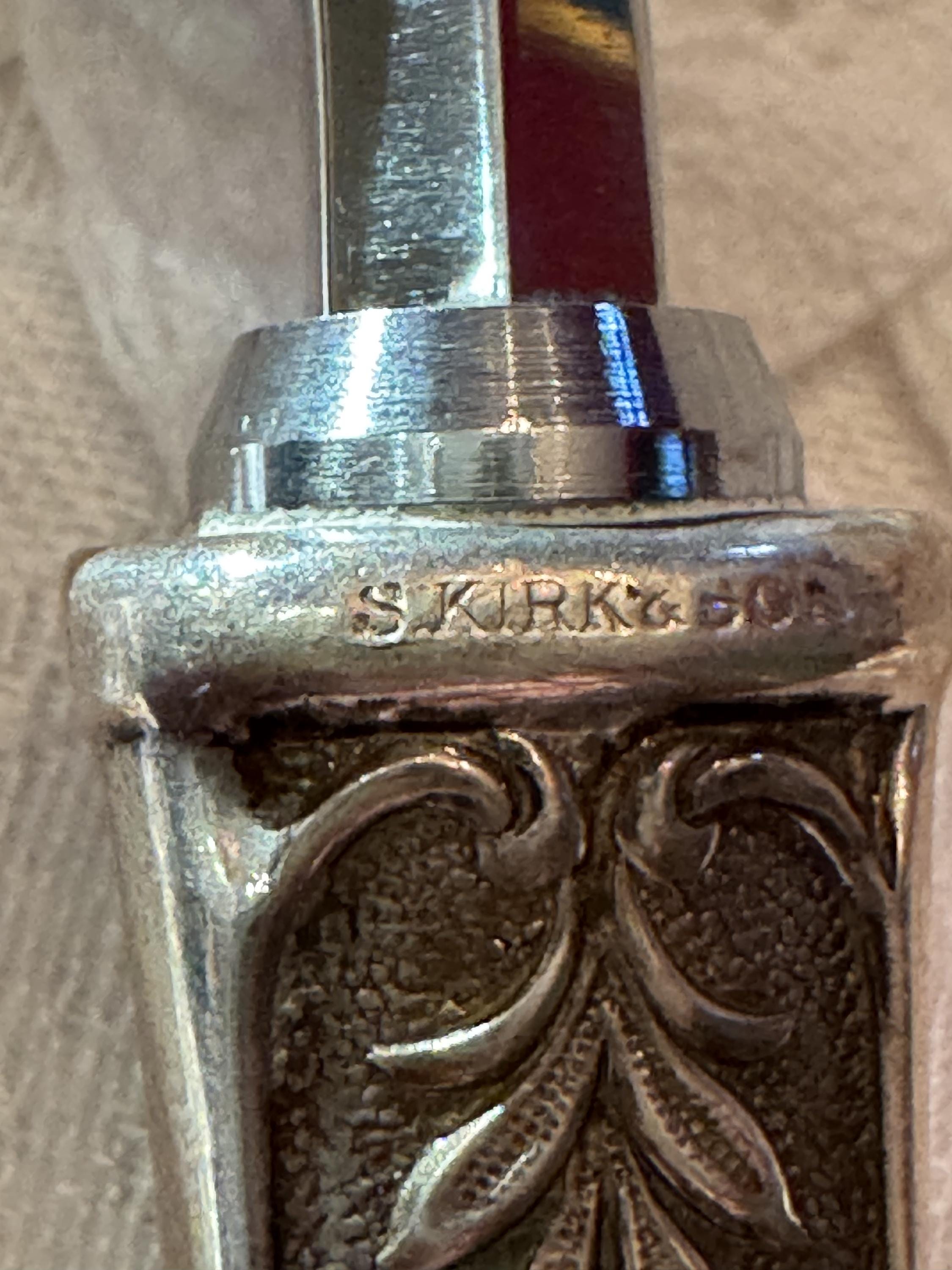
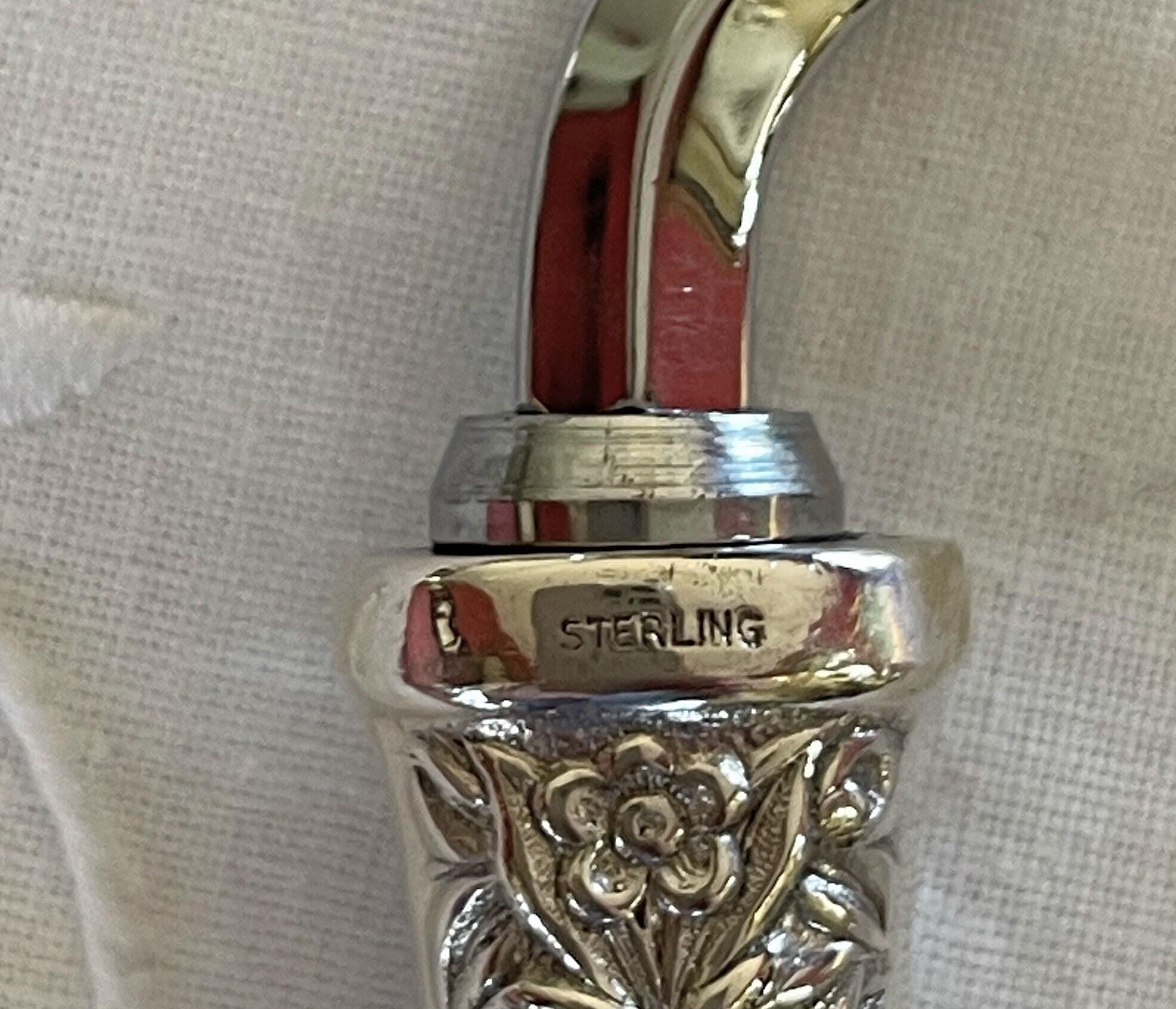
Markings: S. Kirk & Son; sterling.
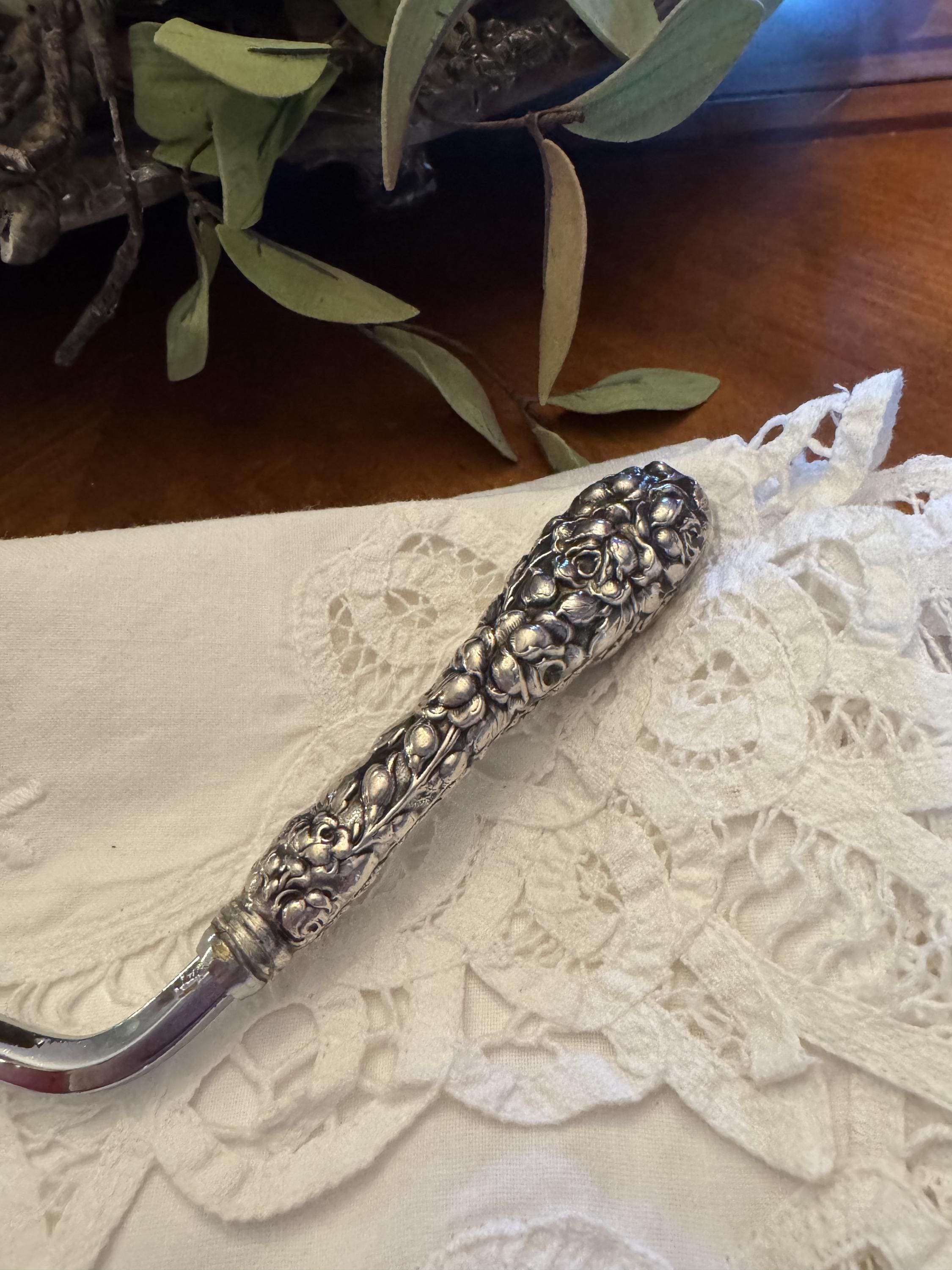
As with the other, the working end is stainless steel, (you want this) and the handle is sterling silver. This piece was made by S. Kirk and Son, and is crafted in the Rose pattern, a classic with an open center for engraving, should you wish, dating sometime around 1932. This server has a stainless blade, again, preferred. This is a great gift, as well, and can be monogrammed near you. This server's Rose pattern is reminiscent of the German Hildesheimer Rose which was celebrated as having withstood the bombings of war to grow beautiful again through the ashes.
Style C:
Length: 10 1/2 inches
Tine width: 3 5/8 inches
Weight: 139 grams
Markings: S. Kirk & Son; sterling.
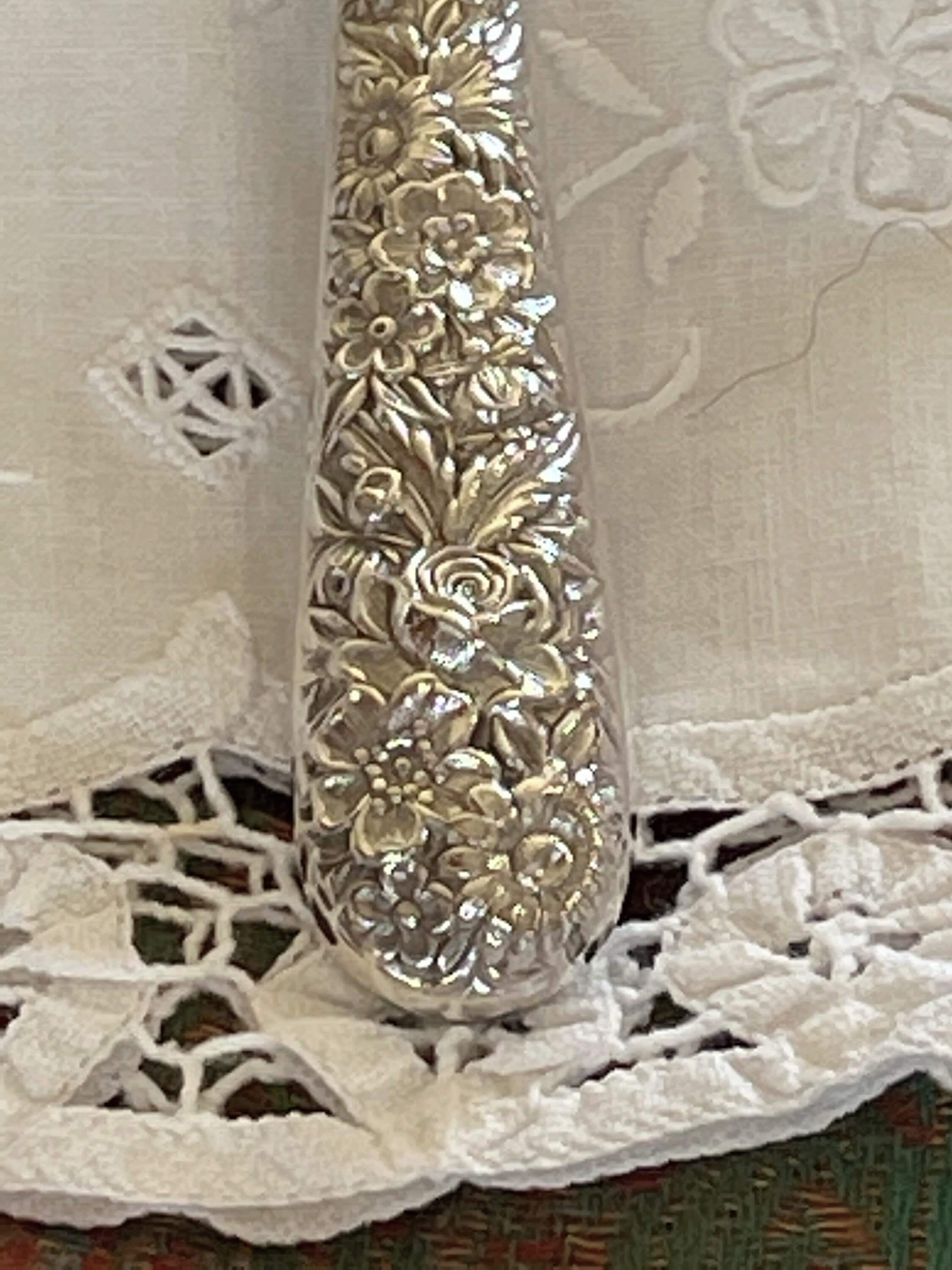
As with the other, the working end is stainless steel, (you want this) and the handle is sterling silver. If a piece is marked S. Kirk & Son and is completely covered in flowers... it is the Repoussé pattern.
Dating 1932, theses servers are crafted in the Repousse pattern, a classic. Solid sterling silver, standing the test of time, sweet details indicative of its age...This is a great gift for new brides-to-be...something I love to give with a note of wonder about the women who first used it and treasured it...
Style D:
Length: 10 3/4 inches
Tine width: 3 5/8 inches
Weight: 138 grams
Markings: S. Kirk & Son, INC; sterling.
As with the other, the working end is stainless steel, (you want this) and the handle is sterling silver. Like Style C, this is creafted in the Repousse pattern, 1932+. There is a slight difference in weight between this and Style C, but the bigger difference is the name, thus the vintage. Beautiful.
Since the tines of these pieces are stainless steel (desirable) and since the handle is solid silver, you don't have to worry about the durability of the finish. A simple polish removes any accumulating tarnish. (I prefer Hagerty Silversmith's wash with a tarnish preventative. Avoid using silver dips; they'll remove the lovely patina that gathers in the crevices to enhance the detail of these pieces.)
Free of dings and dents; no monograms.
Commensurate with age, the condition of these pieces is very good to excellent.
See our entire collection of elegant tableware here: https://notbeforejava.patternbyetsy.com/shop/18216439/tableware-and-linens -
Shipping & Policies
Shipping from United States
Processing time
1-5 business days
Customs and import taxes
Buyers are responsible for any customs and import taxes that may apply. I'm not responsible for delays due to customs.
Payment Options
Returns & Exchanges
Returns & exchanges accepted within 7 days
Buyers are responsible for return shipping costs. If the item is not returned in its original condition, the buyer is responsible for any loss in value.
I gladly accept returns, exchanges, and cancellations
Request a cancellation within: 3 hours of purchase
The following items can't be returned or exchanged
Because of the nature of these items, unless they arrive damaged or defective, I can't accept returns for:
- Custom or personalized orders
Conditions of return
Buyers are responsible for return shipping costs. If the item is not returned in its original condition, the buyer is responsible for any loss in value.
Questions about your order?
Please contact me if you have any problems with your order.
Frequently Asked Questions
Gift wrapping and packaging
Most of our antique and handmade items are beautifully gift wrapped. The exceptions include larger pieces and the seasonal decor such as our beautiful garland.
Custom and personalized orders
Returns of custom items will be subject to certain conditions, specifically if your custom request renders the item unsaleable in the future. Always reach out to me because ultimately, I want you to be happy. 🎈
Returns on items with Free Shipping
If the item you purchased has a flaw, I will refund the full purchase price, no problem. If, however, you just changed your mind after receiving it, I will deduct the price of shipping the item to you after I have received it from you. Kindly send it back within three days 🎈
Related Products


